

Medical Oxygen Plants in India: Engineering Excellence, Reliability & Why Oxair Sets the Benchmark
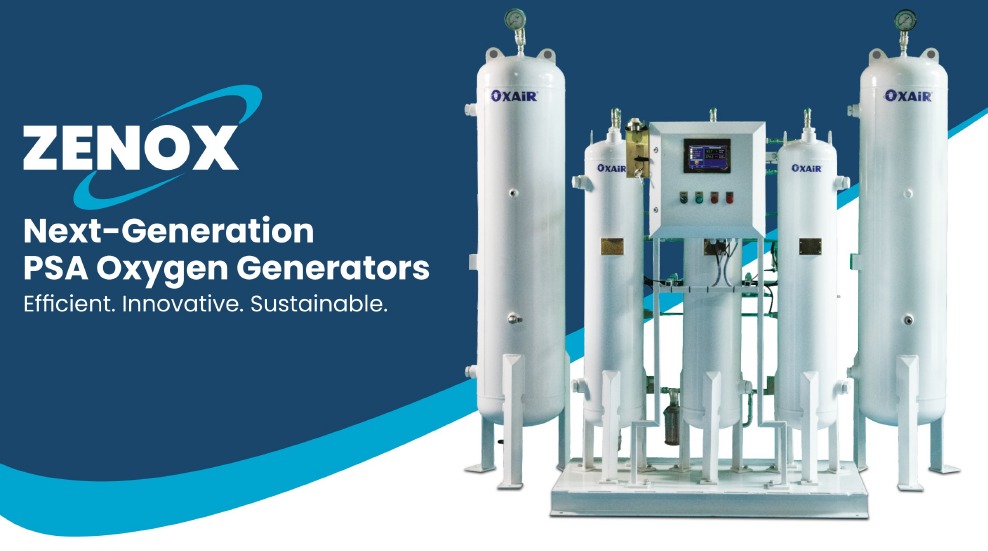
India’s healthcare infrastructure is transitioning from outsourced oxygen dependency to self-reliant, engineered oxygen generation systems. A Medical Oxygen Plant is no longer treated as an emergency backup — it is now a core hospital utility asset.
Medical Oxygen Plant: Design & Capacity Planning Overview
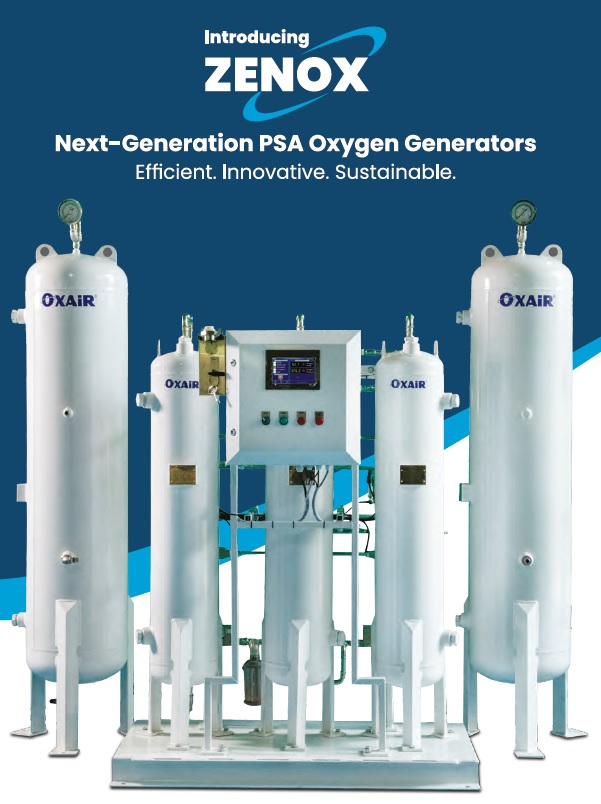
A Medical Oxygen Plant uses PSA (Pressure Swing Adsorption) technology to generate 93±3% medical-grade oxygen and integrate it directly into the hospital’s MGPS system.
Key Design Considerations Include:
- Accurate oxygen demand calculation (beds, ICU ratio, OT load)
- Peak surge factor planning (1.5–2× demand)
- Redundancy with backup manifolds
- DG electrical integration
- Tropicalized design for Indian ambient conditions
Traditional Oxygen Supply vs On-Site Generation
Hospitals traditionally rely on:
- Jumbo Cylinders
- Liquid Oxygen (LOX)
Both systems involve logistics dependency, refill schedules, pressure drop risks, and evaporation losses (in LOX systems).
The Oxair Advantage: Australian Technology, Indian Manufacturing
Oxair systems combine Australian engineering technology with Indian manufacturing excellence. This hybrid model delivers global engineering standards while ensuring cost-effective local production.
Key Differentiators:
- Proven Australian PSA design architecture
- Precision-engineered adsorption systems
- Indian manufacturing for faster delivery & service
- High ambient performance reliability (40°C+)
- Industrial-grade compressors & PLC automation
Innovative MBVD™ Technology & Zero Oxygen Loss Advantage
Unlike Jumbo Cylinders and LOX systems that suffer handling losses, pressure drops, and cryogenic evaporation, Oxair PSA systems generate oxygen on demand.
This ensures virtually 0% oxygen loss at the generation level — oxygen is produced exactly as required and delivered directly into the MGPS network.
Comparison Overview:
- Jumbo Cylinders – Handling loss, residual pressure loss
- LOX – Evaporation loss, tanker dependency
- Oxair PSA – On-demand production, no transport or evaporation loss
Reliability & Service Uptime
Reliability is a critical parameter for hospital oxygen infrastructure. Oxair plants are engineered for:
- Continuous 24/7 operation
- PLC-based monitoring systems
- Structured preventive maintenance programs
- Fast-response Indian service network
- Long lifecycle durability (15+ years)
High service uptime ensures uninterrupted oxygen availability — a non-negotiable requirement in critical care environments.
Lifecycle Economics & ROI
While cylinder and LOX systems may appear lower in initial setup cost, long-term lifecycle economics favor PSA generation.
Typical 5-Year Comparison:
- Cylinders: ₹2–3 crore total cost
- LOX: ₹1.8–2.4 crore total cost
- Oxair PSA: ₹1.3–1.8 crore total cost
Return on investment is typically achieved within 2–4 years, depending on hospital capacity.
Scalable & Future-Ready Infrastructure
Oxair’s modular architecture allows capacity expansion without full system replacement. This ensures infrastructure scalability as hospitals increase bed strength, ICU capacity, or transition to medical college status.
Regulatory Alignment & Compliance
Oxair systems align with Indian Pharmacopoeia purity standards, PESO safety norms, and Ministry of Health oxygen infrastructure guidelines.
Conclusion: Engineering Reliability with Global Standards
A Medical Oxygen Plant is no longer a discretionary upgrade — it is an essential, engineered utility. Compared to Jumbo Cylinders and LOX systems, Oxair’s Australian technology-backed, Indian-manufactured PSA systems deliver reliability, zero-loss generation, service uptime, and long-term cost control.
For hospital promoters, EPC contractors, and biomedical planners, investing in a high-quality PSA oxygen plant ensures supply security, regulatory compliance, and infrastructure resilience for the next 15 years and beyond.